Breakfast is frequently hailed as the most important meal of the day. For growing children a nutrient dense morning meal fuels brain development stabilizes energy levels supports physical growth and improves focus throughout the school day. However, for millions of parents around the world, breakfast time is not a peaceful family ritual it is a daily battleground.
To help simplify your mornings, explore our full collection of easy breakfast recipes designed for busy familiesIf you have ever found yourself staring at a completely untouched plate of food while your child turns away in disgust you are far from alone. Feeding a selective or picky eater is one of the most taxing challenges of early parenthood. The stress of worrying whether your child is getting enough vitamins, minerals, and calories can turn every morning into an exhausting race against time.
To solve breakfast ideas for picky eaters, we must first look beyond the surface. Selective eating is rarely a simple case of a child being stubborn or disobedient. It is a complex blend of developmental psychology, sensory processing, genetic flavor preferences and environmental dynamics. Understanding why children refuse food is the critical first step toward transforming morning chaos into mealtime success.
The Science of Picky Eating Why Kids Refuse Food
To help a selective eater parents must understand what is happening inside the child’s mind and body when faced with a plate of food. Pediatricians and child psychologists generally classify picky eating as a normal developmental phase, but the underlying mechanisms behind it are rooted in biology and evolution.
1. Evolutionary Neophobia (Fear of the New)
From an evolutionary standpoint, young children naturally become cautious about new foods around the age of two precisely when they become mobile enough to wander away from their parents. In nature eating an unfamiliar plant or berry could be toxic. Food neophobia (the fear of new foods) was an evolutionary survival mechanism designed to keep young humans safe. While modern grocery stores do not present toxic threats your child’s primitive brain is still hardwired to view unfamiliar smells, textures, and colors with suspicion.
2. Sensory Processing and Texture Sensitivity
Children process sensory information far more intensely than adults. A texture that feels mildly soft to an adult might feel intolerably slimy to a child. A crunch that feels satisfying to you might feel uncomfortably hard or abrasive to a sensitive mouth. Picky eaters often struggle with one or more sensory elements:
Texture: Disliking wet, mixed, or slimy foods (stewed vegetables, mashed potatoes, or yogurt with fruit pieces).
Color: Rejecting specific colors, most commonly green, because green foods in nature are often bitter or unripe.
Temperature: Refusing foods that are too hot or lukewarm preferring consistent room temperature or cold items.
Visual Presentation: Feeling overwhelmed when different food groups touch each other on the plate.
3. Taste Bud Density and Bitterness
Children have significantly more taste buds per square millimeter on their tongues than adults do. Additionally children are genetically predisposed to prefer sweet and salty flavors because those tastes signal high energy carbohydrates and essential minerals needed for rapid growth. Conversely, vegetables (especially cruciferous ones like broccoli, kale, and spinach) contain natural bitter compounds called glucosinolates. To a child’s hypersensitive palate these bitter flavors taste far stronger than they do to an adult, explaining why sweet fruits are accepted while nutrient rich greens are frequently rejected.
4. The Need for Control and Autonomy
Toddlerhood and early childhood are periods of intense independence. Children quickly realize that eating and going to the bathroom are two things adults cannot physically force them to do without a fight. Refusing food becomes a powerful way for a child to exert autonomy and test boundaries. When parents react with anxiety bargaining or anger the child realizes that food yields immense power over the household dynamic reinforcing the refusal behavior.
The High Cost of Morning Mealtime Stress
When breakfast becomes a source of tension, it sets a negative emotional tone for the rest of the day affecting both parents and children.
Step
Action/Reaction
Description
1
Parent serves a meal
The parent prepares and presents the food to the child.
2
Child senses pressure/anxiety
The child feels stress or anxiety around eating.
3
Child refuses food completely
The child responds to the pressure by rejecting the meal.
4
Stress increases for next meal
Tensions rise, leading to more anxiety for the next mealtime.
The Emotional Impact on Parents
Parents of selective eaters often experience profound guilt and frustration. You spend time and money sourcing healthy ingredients, only to watch them end up in the trash. This triggers fears of nutritional deficiencies poor growth, or long term health consequences. Over time, parents default to becoming short order cooks, preparing two or three different meals every morning just to ensure their child eats something.
The Impact on Children
When children feel pressured, bribed, or forced to eat, their body activates a mild fight or flight stress response. Adrenaline surges, cortisol levels rise, and appetite is physically suppressed. An anxious child literally cannot feel hungry. Furthermore, turning mealtimes into power struggles creates long term negative associations with food, making them even more hesitant to try new dishes in the future.
5 Common Mealtime Mistakes Parents Make (And How to Fix Them)
Even the most loving parents frequently fall into common behavioral traps when trying to get their children to eat. Recognizing these mistakes allows you to pivot toward strategies that actually work.
Mistake 1: Pressuring, Bribing, or Forcing
The Scenario: Eat three more bites of egg and you can have a cookie or You can’t leave the table until your plate is clean.
Why It Fails: Bribing teaches children that healthy food is a punishment they must endure to earn a reward. Clean plate rules teach kids to ignore their internal fullness cues, setting the stage for unhealthy eating habits later in life.
The Fix: Shift to the Division of Responsibility in Feeding (developed by dietitian Ellyn Satter):
The Parent’s Job: Decide what food is offered, when it is served, and where it is eaten.
The Child’s Job: Decide whether to eat and how much to eat from what is offered.
Mistake 2: Becoming a Short Order Cook
The Scenario: Your child rejects the scrambled eggs, so you immediately clear the plate and make a waffle, followed by a bowl of sugary cereal when the waffle is also rejected.
Why It Fails: This teaches children that if they hold out long enough, they will always be rewarded with their favorite low nutrient safe foods.
The Fix: Always serve at least one familiar, accepted food (a safe food) alongside new or less favored items. If they choose only to eat the safe food (like a piece of plain bread), respect their choice without immediately cooking a brand new meal.
Mistake 3: Overwhelming the Plate
The Scenario: Serving an adult-sized portion of oatmeal topped with a massive handful of fruits and seeds.
Why It Fails: Large quantities of unfamiliar food visually intimidate young children causing them to shut down before taking a single bite.
The Fix: Serve tiny, micro portions of new foods as small as a single pea or a pinky-nail-sized piece of fruit. Small portions look manageable and lower the pressure.
Mistake 4: Hiding Vegetables Completely
The Scenario: Blending spinach into a dark smoothie or sneaking finely pureed mushrooms into a sauce without telling the child.
Why It Fails: While pureeing vegetables boosts nutrient intake in the short term, it does not teach the child to accept the vegetable in its natural form. If a child discovers hidden food, it destroys their trust in you as a reliable provider of safe meals.
The Fix: Be transparent. You can blend veggies into sauces for extra nutrition, but also present a visible piece of the vegetable on the plate so they learn to recognize and accept it over time.
Mistake 5: Labeling Your Child
The Scenario: Saying Oh, he doesn’t like green things or She is my picky eater in front of family or friends.
Why It Fails: Children internalize the labels adults assign to them. Once a child adopts the identity of a picky eater, they feel obligated to act according to that role.
The Fix: Use neutral, growth oriented language. Instead of saying He hates tomatoes, say He is still learning to like tomatoes.
Nutritional Priorities for Young Minds and Bodies
When planning breakfast for selective eaters, it is easy to hyper focus on specific single foods. However, nutrition is about the whole picture over time. A balanced breakfast for a growing child should ideally aim for three main building blocks:
Nutritional Element
Why Growing Kids Need It
Best Low Pressure Breakfast Sources
Complex Carbohydrates
Provide sustained energy for the brain and muscles without sugar crashes.
If a picky eater refuses one element (such as protein from eggs), the goal is not to force the egg, but to find alternative forms of protein they feel safe eating (such as nut butter spread thin on toast, yogurt, or cheese slices).
7 Complete Breakfast ideas for picky eaters & Visual Strategies
Transitioning from theory to practice requires concrete, actionable ideas. When serving a picky eater, how food looks on the plate matters just as much as how it tastes. Brightly colored dishes, distinct food placement, and familiar shapes dramatically increase a child’s willingness to try a meal.
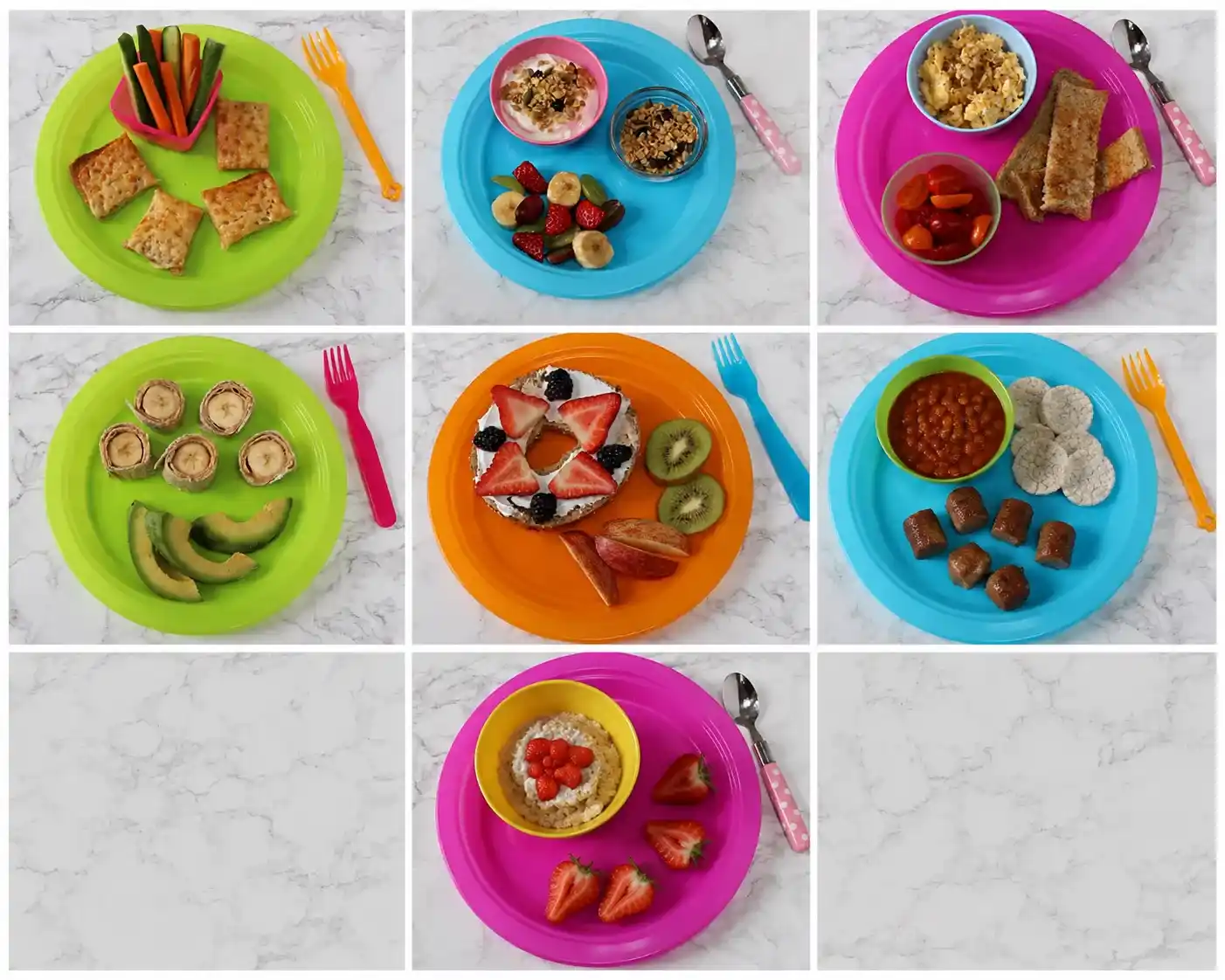
Below are 7 detailed breakfast ideas based on realistic, kid-approved plates. Each recipe breaks down exact ingredients, step by step preparation, texture modification hacks, and specific visual strategies to help selective eaters feel comfortable at the breakfast table.
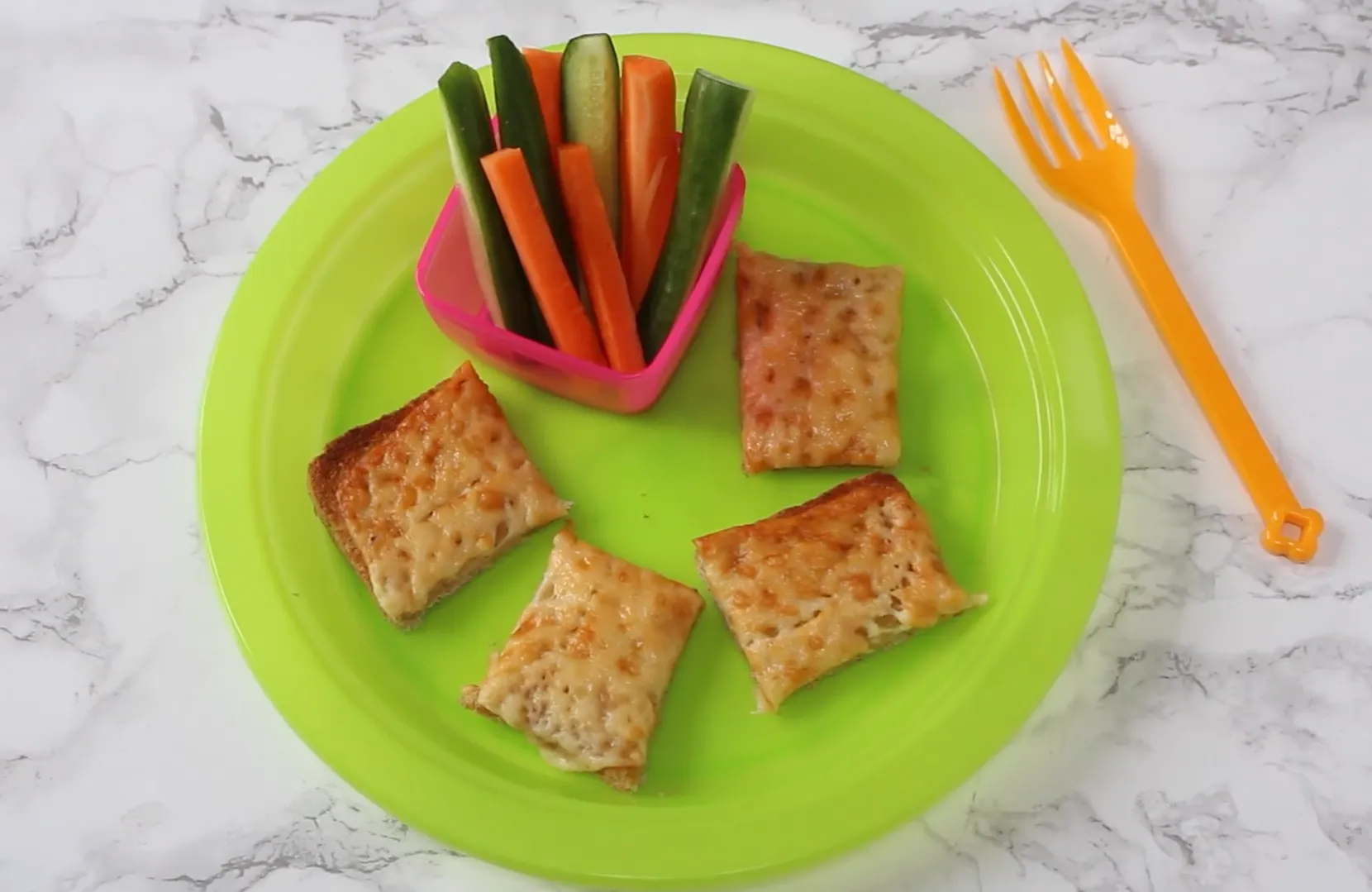
Vegetables are often the single most challenging food group for picky eaters due to their complex textures and natural bitterness. Framing raw vegetables alongside a familiar, high-comfort main item such as melted cheese on warm toast creates a safe landing zone for new sensory experiences.
Item/Component
Placement/Details
Target Serving Size
Veggie Dip Cup
Top Left
Carrots & Cucumbers with mild dip
Cheese Toast Square 1
Top Right
1 Bite sized Toast Square
Cheese Toast Square 2
Middle Right
1 Bite sized Toast Square
Cheese Toast Square 3
Bottom Left
1 Bite sized Toast Square
Cheese Toast Square 4
Bottom Right
1 Bite sized Toast Square
Ingredients
For the Cheese Toast:
2 slices of whole wheat or whole grain bread
1/3 cup shredded mild mozzarella or young cheddar cheese
1 tsp unsalted butter (optional, for spreading)
A pinch of dried oregano or mild garlic powder (optional, for adventurous eaters)
For the Veggie Side:
1/2 medium carrot, peeled
1/2 English cucumber, peeled
1 small colorful container or silicone muffin cup
Step by Step Instructions
Prepare the Bread Base: Lightly toast the bread slices in a toaster until they are firm but not dark brown. Applying a thin layer of butter keeps the bread moist under the cheese.
Melt the Cheese: Sprinkle shredded mozzarella or cheddar evenly over the bread. Place the slices on a baking sheet and broil under low heat for 2-3 minutes, or until the cheese is completely melted, bubbly, and slightly golden.
Cut into Squares: Transfer the cheese toast to a cutting board. Let it cool for 60 seconds so the cheese sets, then slice each toast piece into 4 equal quarters (forming small, bite sized square sandwiches or toasts).
Prep the Veggie Batons: Cut the peeled carrot and cucumber into uniform, thin sticks (about 3 inches long and 1/4-inch thick).
Assemble the Plate: Stand the vegetable sticks upright in a small pink or colorful silicone container to keep them crisp and dry. Arrange the 4 cheese toast squares around the plate, leaving clear space between items.
Sensory & Texture Hacks
For Texture-Sensitive Kids: If your child dislikes the wetness of raw cucumber seeds, scoop out the watery core before cutting the cucumber into sticks.
For Extra Crunch Lovers: Toast the bread longer so it provides a distinct, satisfying crunch that matches the texture of the carrot sticks.
The Picky Eater Strategy
Call these Mini Pizza Bites. Many children accept pizza readily because of its familiar, mild flavor profile. Serving vegetable sticks vertically in a small cup transforms them into interactive dippers. You can place a tiny drop of mild ranch or hummus at the bottom of the cup to encourage dipping without forcing it.
Meal 2: Yogurt & Granola Bowl with Fresh Fruit
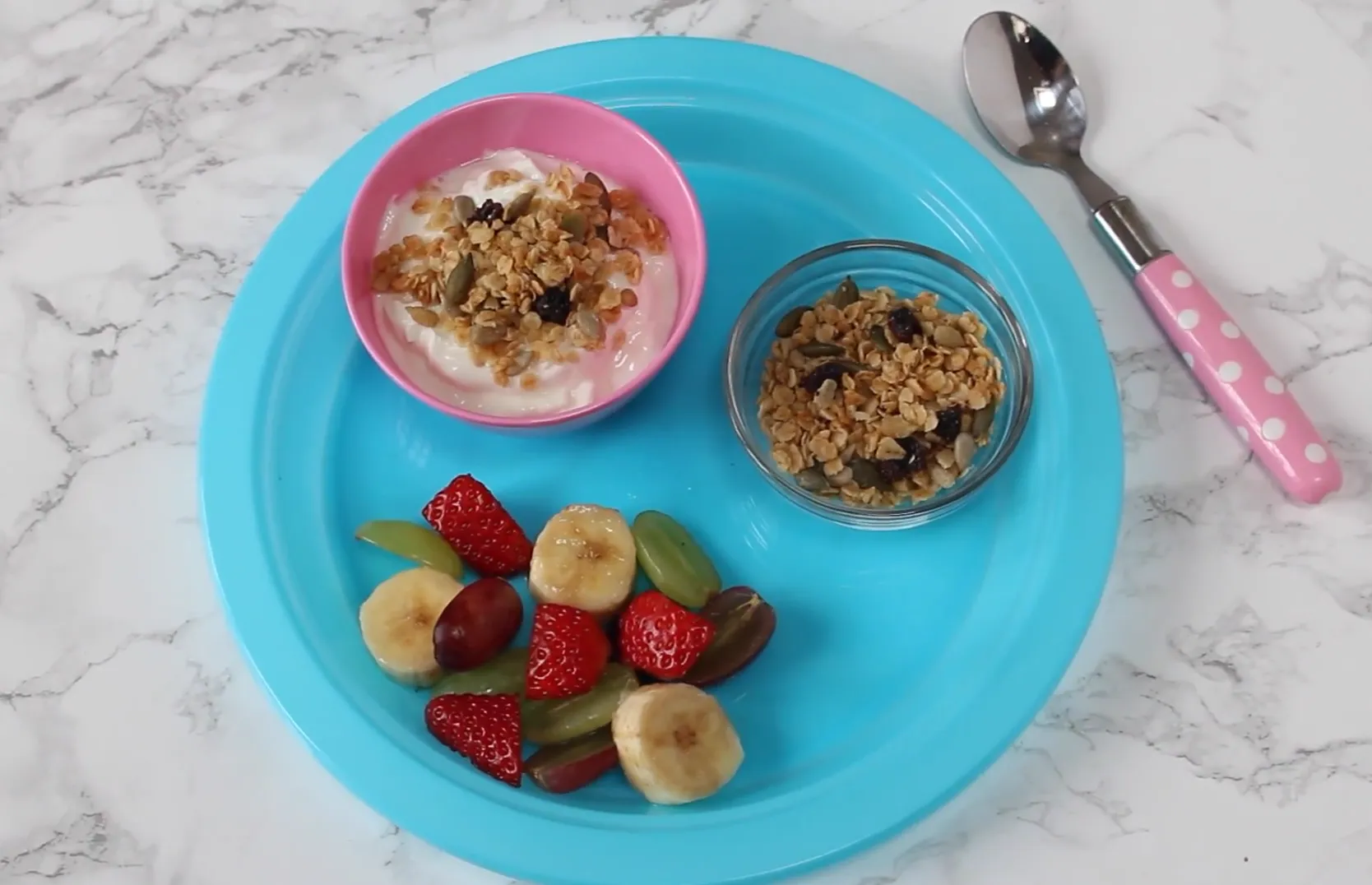
Smooth, creamy textures are often preferred by picky eaters who get overwhelmed by foods with variable crunch. This meal allows kids to manage textures independently by keeping crunchy seeds and chewy fruit physically separated from the smooth dahi or yogurt base.
Ingredients
For the Yogurt Base:
1/2 cup plain Greek yogurt, vanilla yogurt, or full-fat coconut yogurt
1 tsp honey or maple syrup (optional, if using plain unsweetened yogurt)
For the Granola & Fruit:
1/3 cup low-sugar oat granola (containing pumpkin seeds, sunflower seeds, or raisins)
1/2 ripe banana, sliced into rounds
3-4 fresh strawberries, washed, hulled, and quartered
4-5 seedless grapes (red or green), sliced in half lengthwise
Step by Step Instructions
Scoop the Yogurt: Place 1/2 cup of yogurt into a dedicated, brightly colored bowl (like a small pink or blue dish). Smooth the top with the back of a spoon.
Add Initial Granola: Sprinkle 2 tablespoons of granola lightly over one side of the yogurt bowl, leaving part of the smooth yogurt exposed.
Fill the Side Bowl: Measure the remaining granola into a separate, clear glass dish. This lets the child control whether they want more crunch during the meal.
Arrange the Fruit Cluster: On the main blue plate, arrange sliced bananas, quartered strawberries, and halved grapes in a neat, unmixed cluster next to the bowls.
Sensory & Texture Hacks
Handling Lumps: If your child dislikes seed textures or dried fruits, choose a plain oat-and-honey granola without raisins or large seeds.
Temperature Adjustment: Take the yogurt out of the refrigerator 5-10 minutes before serving. Some children reject yogurt simply because it feels uncomfortably cold on their teeth.
The Picky Eater Strategy
Selective eaters often dislike mystery textures such as finding a chew of fruit hidden beneath a scoop of yogurt. By presenting fruit in clean, visible slices next to the bowl, you respect their need for visual clarity. They can eat the fruit plain, line it up on the plate, or dip it into the yogurt at their own pace.
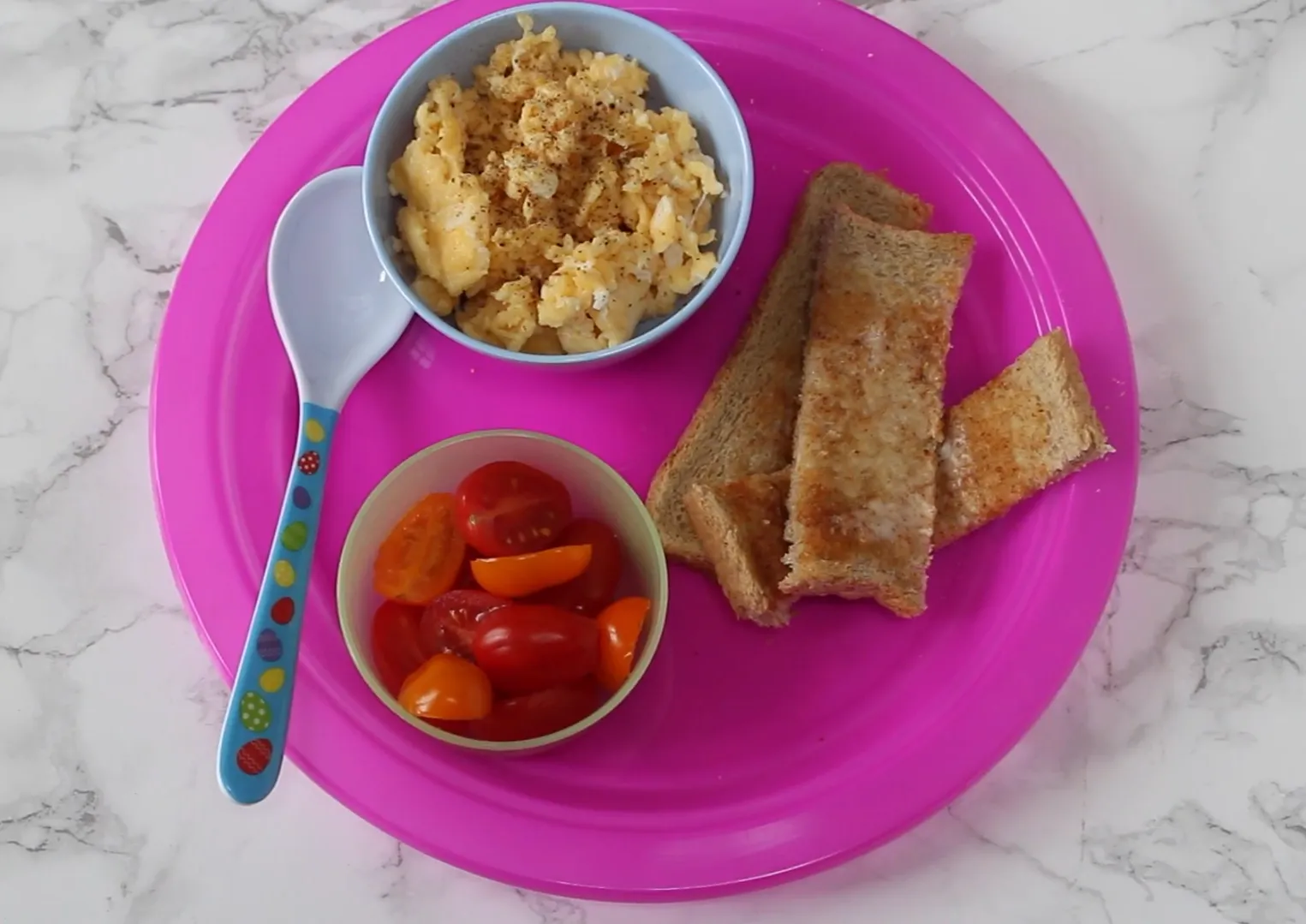
Meal 3: Soft Scrambled Eggs with Toast Soldiers & Tomatoes
Eggs are a powerhouse of essential choline, healthy fats, and bioavailable protein. However, overcooked or rubbery eggs are a major trigger for texture-sensitive children. Preparing eggs softly and serving them alongside bread soldiers turns a basic meal into an engaging dipping experience.
Ingredients
For the Eggs:
2 large eggs
1 tbsp whole milk, cream, or oat milk
1 tsp unsalted butter
A light pinch of salt and finely ground black pepper
For the Sides:
1-2 slices whole wheat bread
1 tsp butter for spreading
4-5 red and orange cherry tomatoes, washed and halved
Step by Step Instructions
Whisk the Eggs: Crack the eggs into a small bowl, add 1 tablespoon of milk and a tiny pinch of salt, and whisk vigorously with a fork until fully combined and uniform in color.
Cook Gently: Melt butter in a non-stick skillet over low heat. Pour in the egg mixture. Let it sit for 20 seconds, then gently push the eggs across the pan with a silicone spatula to create soft, tender curds. Remove from heat while the eggs still look slightly glossy.
Plate the Eggs: Transfer the soft scrambled eggs into a small bowl and add a microscopic pinch of black pepper on top.
Make Toast Soldiers: Toast the bread until golden brown, spread lightly with butter, and slice into long, vertical strips (about 1 inch wide).
Prep the Tomatoes: Slice red and orange cherry tomatoes in half lengthwise and place them in a separate small container. Arrange all three components on a bright plate.
Sensory & Texture Hacks
Eliminating White vs. Yellow Separation: Ensure you whisk the eggs thoroughly before cooking. Seeing separate streaks of egg white can trigger food anxiety in hyper-visual children.
Controlling Bread Moisture: Avoid buttering the toast while it is steaming hot, which can make the bread soggy. Let it cool for a few seconds first so it stays crisp.
The Picky Eater Strategy
Naming food matters. Plain toast strips might be ignored, but Toast Soldiers sound fun and adventurous. Encourage your child to use the toast strips like edible spoons to scoop up the soft scrambled eggs. Offering two colors of cherry tomatoes (red and orange) adds visual appeal without adding new, unexpected flavors.
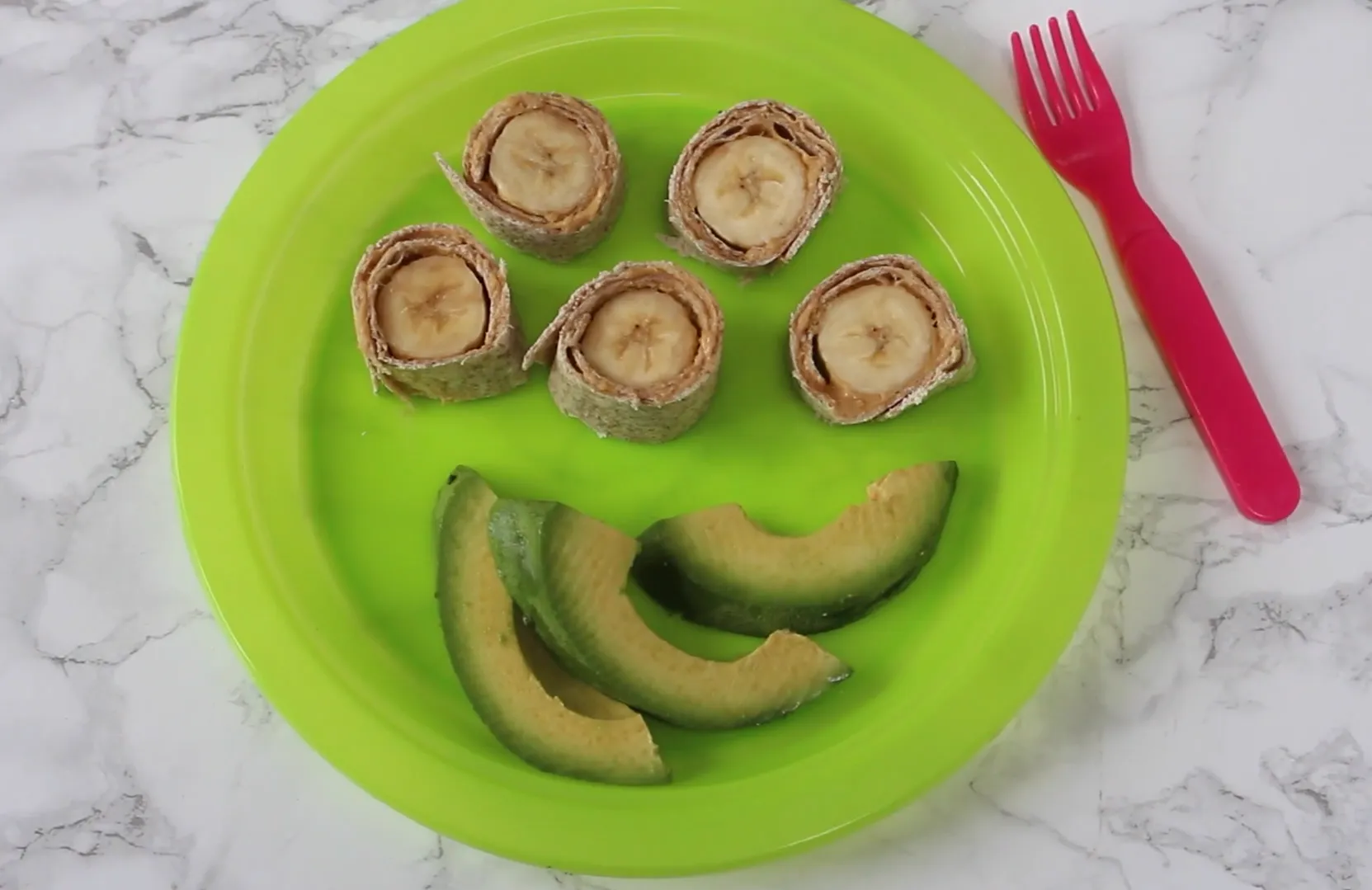
Meal 4: Banana Peanut Butter Tortilla Roll Ups with Avocado
Fat and potassium are vital for a growing child’s nervous system and daily energy needs. This recipe presents familiar ingredients peanut butter, banana, and flatbread in a sushi-inspired roll, paired with cream colored avocado slices.
Plate Section
Item Name
Placement/Arrangement
Top Section
Banana Pinwheel Rolls
Arranged side-by-side (Roll 1, Roll 2, Roll 3, Roll 4)
1/2 ripe avocado, sliced into thick crescent wedges
Step by Step Instructions
Warm the Tortilla: Place the tortilla on a plate and microwave for 5-10 seconds until soft and pliable.
Spread the Butter: Spread nut butter evenly across the surface of the tortilla, leaving a small 1/2-inch border around the edge.
Roll the Banana: Place the whole, peeled banana near the bottom edge of the tortilla. Tightly roll the tortilla up and over the banana until a uniform log is formed.
Slice into Pinwheels: Using a sharp knife, cut off the empty ends of the roll. Slice the remaining log into 1-inch-thick round pieces (pinwheels).
Arrange the Face: Place 5-6 banana pinwheels at the top of a bright green plate. Arrange 3 thick avocado wedges in a gentle curve beneath the pinwheels to create a smiling face.
Sensory & Texture Hacks
Nut Butter Alternative: If your child dislikes thick, sticky textures, thin the peanut butter slightly by mixing it with 1/2 teaspoon of warm water or maple syrup before spreading.
Preventing Avocado Oxidation: Squeeze a drop of fresh orange or lemon juice over the avocado slices so they keep their bright green color and don’t turn brown on the plate.
The Picky Eater Strategy
Creating a smiling face on the plate immediately activates a positive emotional response, lowering mealtime defense mechanisms. Because the banana pinwheels are bite-sized, they eliminate the need for cutlery, making this an easy finger-food option for toddlers and young school-aged kids.
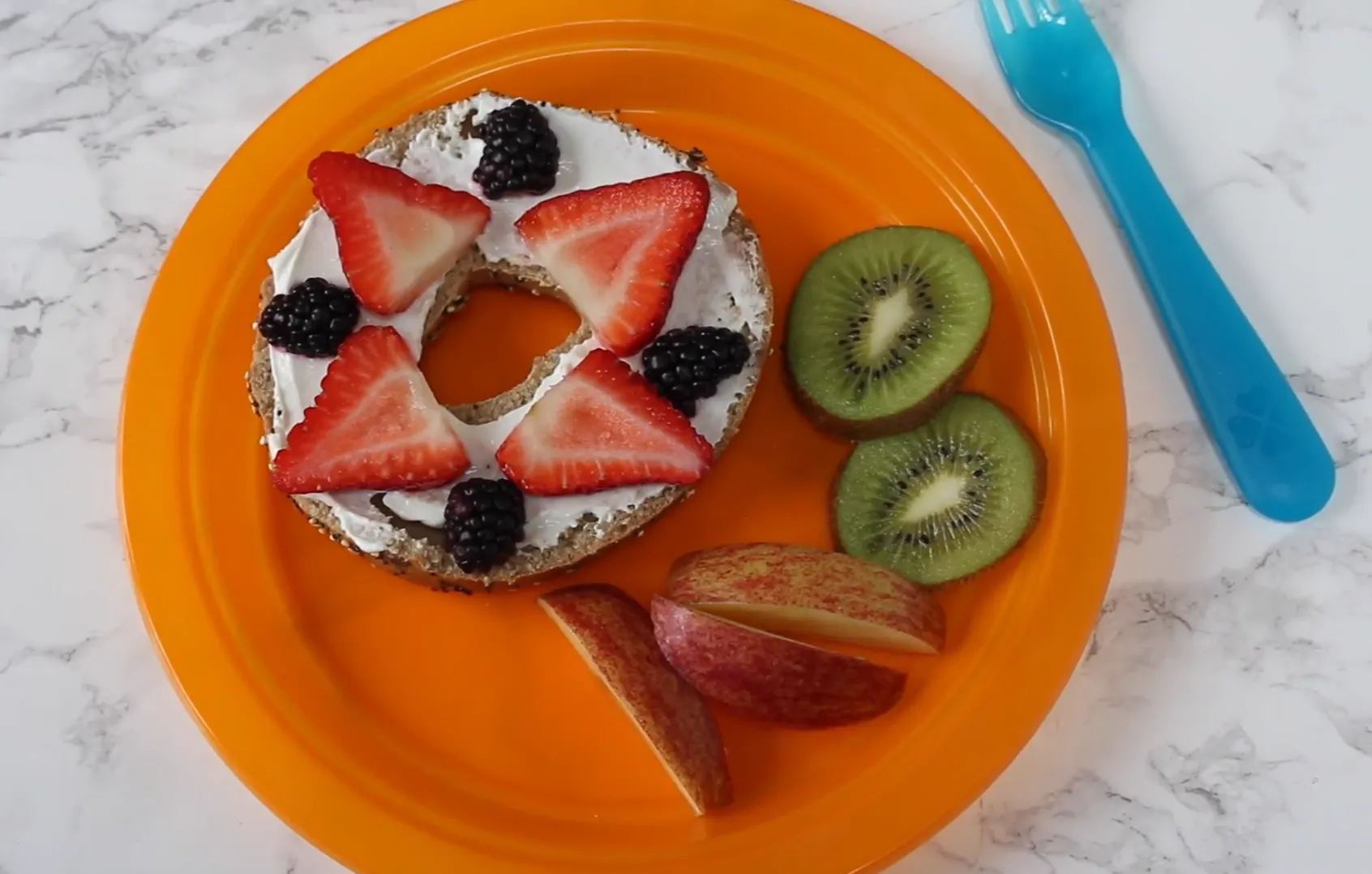
Meal 5: Everything Cream Cheese Bagel with Berry Star & Fresh Fruit
Bagels offer a firm, chewy texture that many children find satisfying and predictable. By using plain cream cheese as a neutral canvas, you can arrange brightly colored berries into eye-catching geometric shapes.
Ingredients
For the Bagel:
1/2 bagel (plain, whole wheat, or lightly topped everything bagel)
2 tbsp plain cream cheese or ricotta cheese
2 fresh strawberries, sliced vertically into clean triangles
4 fresh blackberries or blueberries
For the Side Fruits:
1 kiwi, peeled and sliced into thin rounds
1/2 red apple, cored and sliced into thin wedges
Step by Step Instructions
Toast the Bagel: Toast the bagel half until warm and sturdy enough to support toppings without becoming soggy.
Apply Cream Cheese: Spread a thick, smooth layer of cream cheese over the top of the warm bagel half.
Build the Berry Star: Place four strawberry triangles on top of the cream cheese with their pointed tips facing outward. Place blackberries in the spaces between the strawberries to complete a star pattern.
Add Side Fruit: Peel a kiwi and slice it into clean, green rounds. Cut apple wedges into thin slices. Arrange the side fruit neatly on an orange or contrasting plate.
Sensory & Texture Hacks
Managing Bagel Seasoning: If your child finds whole seeds on an “everything” bagel overwhelming, use a plain or whole-wheat bagel base instead.
Apple Skin Sensitivity: Many picky eaters refuse apples simply because the skin feels tough to chew. Use a Y-peeler to remove the skin completely before slicing.
The Picky Eater Strategy
Geometric shapes naturally appeal to young minds. Arranging food in a star pattern turns breakfast into a visual art piece. Keeping the kiwi rounds and apple wedges uniform in thickness makes the plate look organized, predictable, and non-threatening.
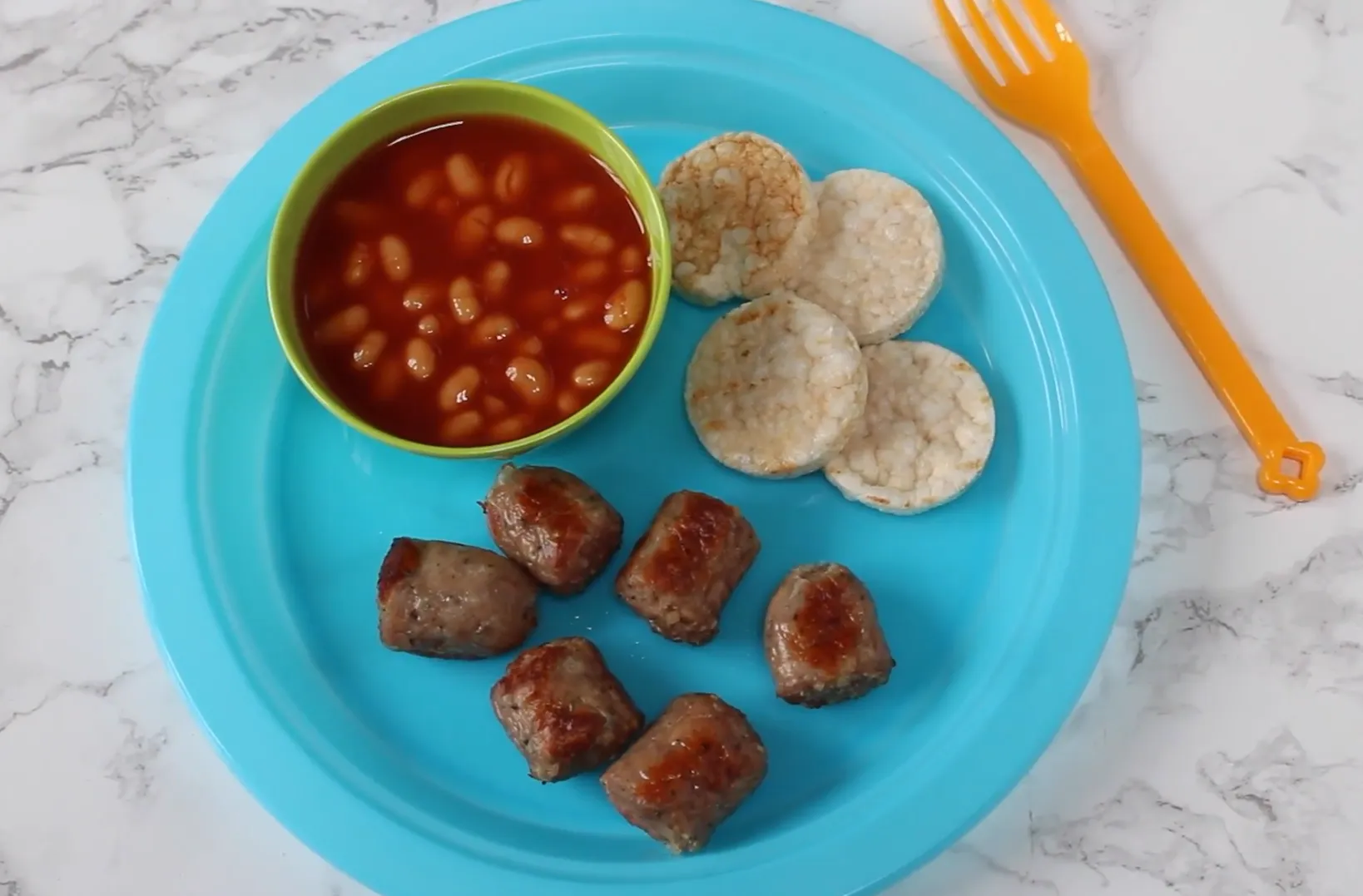
Meal 6: Mini Breakfast Sausages with Baked Beans & Rice Cakes
Savory-seeking picky eaters often reject sweet breakfast cereals or fruits entirely. This hearty plate provides iron, protein, and complex carbohydrates in distinct, touch-free sections.
Ingredients
For the Main Items:
5-6 mini breakfast sausages (turkey, chicken, or beef)
1/2 cup canned baked beans in mild tomato sauce
For the Crisp Side:
4-5 mini plain or lightly salted rice cakes (or thin oat cakes)
Step by Step Instructions
Cook the Sausages: Pan-fry the mini sausages in a non-stick skillet over medium heat for 6-8 minutes, rolling them frequently until browned and fully cooked inside.
Warm the Beans: Pour canned baked beans into a small saucepan and warm gently over low heat for 3-4 minutes.
Dish the Beans: Spoon the warm baked beans into a dedicated green or colorful bowl to contain the tomato sauce.
Plate the Items: Place the mini sausages in a cluster at the bottom of a blue plate. Stack or fan out the plain rice cakes on the side, keeping them well clear of the bean sauce.
Sensory & Texture Hacks
Controlling Sauce Seepage: The biggest trigger on a savory plate is sauce leaking into dry foods. Using a deep bowl for the baked beans ensures the rice cakes stay completely dry and crisp.
Skin Texture on Sausages: If your child dislikes the snap or outer casing of sausages, choose skinless breakfast links or cut them into small, bite-sized coins.
The Picky Eater Strategy
Miniature foods naturally reduce intimidation. Six mini sausages feel far more approachable to a child than two large sausage links. Rice cakes provide a neutral, low-mess crunch that can be eaten plain or used to scoop up sweet tomato sauce from the beans.
Meal 7: Creamy Strawberry Oatmeal
Warm porridge or oatmeal is a classic, fiber packed morning staple. For selective eaters, achieving a silky, lump-free texture is the secret to turning a potentially rejected meal into a requested favorite.
Ingredients
For the Oat Base:
1/2 cup rolled oats or quick-cooking oats
1 cup whole milk, oat milk, or water
1 tsp maple syrup or honey
1/4 tsp pure vanilla extract
For the Toppings:
3 fresh strawberries, finely diced
3 whole or halved fresh strawberries for side plating
Step by Step Instructions
Cook the Oats: Combine oats, milk, maple syrup, and vanilla extract in a small saucepan over medium low heat. Simmer gently for 5-7 minutes, stirring constantly until the oats absorb the liquid and become smooth and creamy.
Bowl the Oatmeal: Ladle the warm oatmeal into a small yellow dish placed on a hot pink plate.
Add Strawberry Topping: Top the warm porridge with a handful of finely diced fresh strawberries right in the center.
Garnish the Plate: Place whole and halved fresh strawberries directly on the pink plate around the yellow bowl.
Sensory & Texture Hacks
The No Lump Method: If your child is highly texture sensitive, pulse dry rolled oats in a blender for 10 seconds before cooking. This creates a smooth, fine oat flour that cooks into a completely silky cereal with no visible oat flakes.
Adjusting Thickness: Keep extra warm milk on hand. If the oatmeal thickens too much as it cools, stir in a tablespoon of warm milk to restore a soft, spoonable consistency.
The Picky Eater Strategy
Bright color contrast creates enthusiasm. Placing a yellow bowl on a bright pink plate makes the meal feel inviting. Offering fresh, sliced strawberries on the side gives children a familiar, solid food item to focus on alongside the soft, warm texture of the oatmeal.
Recipe Comparison & Nutritional Overview
Recipe
Prep Time
Protein Source
Primary Carbohydrate
Best For Kids Who Prefer
1. Cheese Toast & Veggies
10 mins
Mozzarella/Cheddar
Whole Wheat Bread
Savory, crunchy, finger foods
2. Yogurt & Granola Bowl
5 mins
Greek Yogurt, Seeds
Oat Granola
Cold, sweet, smooth textures
3. Soft Scrambled Eggs & Toast
8 mins
Eggs, Milk
Whole Wheat Bread
Warm, soft, dip friendly foods
4. Banana Pinwheel Rolls
5 mins
Peanut/Nut Butter
Tortilla/Flatbread
Fun shapes, sweet fruit, finger foods
5. Berry Bagel & Fruit
7 mins
Cream Cheese
Whole Wheat Bagel
Chewy textures, colorful patterns
6. Mini Sausages & Beans
12 mins
Sausages, Beans
Rice Cakes
Hearty, savory, unmixed meals
7. Creamy Strawberry Oatmeal
8 mins
Milk, Oats
Rolled Oats
FAQs
Q: What are some good breakfast ideas for adult picky eaters?
Customizable smoothie bowls, deconstructed omelets, or avocado toast with toppings served on the side work best because they let adults control exact textures and flavor combinations.
Q: What is a quick and easy breakfast for picky eaters?
3-ingredient oat pancakes made with mashed banana, eggs, and rolled oats. They are soft, naturally sweet, and take less than 10 minutes to make.
Q: What can I serve a picky toddler for breakfast?
Waffle or French toast sticks with a small cup of syrup or yogurt for dipping. Toddlers love finger foods that allow them to dip and play with their meal.
Q: How can I make a healthy breakfast that a picky eater will actually eat?
Make an egg and cheese breakfast quesadilla using a whole wheat tortilla. Crisp it in a pan so the texture is familiar and appealing while hiding solid protein inside.
Q: What are child friendly breakfast ideas for picky kids?
DIY mini bagel pizzas or fruit and cheese skewers. Serving food on a stick or letting kids assemble simple toppings makes mealtime less intimidating.
Q: What are some Indian breakfast ideas for kids who are picky eaters?
Mini cheese uttapam, mild suji (rawa) halwa, or soft paneer rolls. You can also make mild vegetable stuffed parathas with a side of yogurt.
Q: What is an easy breakfast that a 10 year old can make by themselves?
Overnight oats in a jar. They just mix oats, milk, honey, and their favorite berries in a jar the night before no stove or cooking required in the morning.
Q: What are simple, fuss free breakfasts for kids?
Toast with peanut butter and banana slices, warm porridge topped with honey, or boiled egg slices served with crackers. Keep the ingredients separate and minimal.